This article presents the value of SilcoNert® 2000 surface treatment, which eliminates surface adsorption of active compounds on steel, glass, ceramic and carbon surfaces in Titanium, platinum.
It can be applied to different media and is used mainly in analysis for its exceptional characteristics vis-a-vis reactive compounds such as H2S, NOx, ammonia, mercury and other sulphur products in general.
Surface treatment was invented in 1987. The aim was to obtain for chromatography of metal columns with the low surface activity of glass, in order to reduce diameters and obtain solid columns. This know-how has been widely developed and is now Silcotek, the market leader for analysis, which offers different coatings or « Coatings ». There are different trade names for the same treatment: Silconert® = Sulfinert® = Siltek®
The use of treated tubing and components in the sampling circuit and in the analyser is not commonly measured. It ensures that the compound is not lost by reaction with the supports and thus ensures its detection. It also allows direct transfer of the sample without passivation. The sample is detected immediately without latency. In addition to delayed detection and implicit corrosion problems, the release of the compound may occur, the detection of which would not be related to actual sample variation.
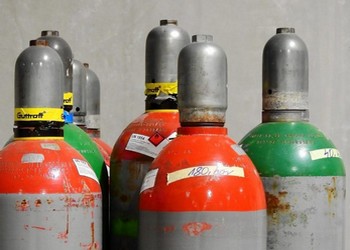
Silconert2000 treatment is recommended for transfer or storage of the sample. Thus, the range of treated products naturally includes tubes of different diameters, but also sample cylinders for sampling.
It is necessary to apply an inert layer to the surface of the part in contact with the product. This happens under vacuum and at high temperature. The vacuum allows the repository to apply evenly on the room, even in inaccessible places. A Silane gas is then applied and will deposit a thin layer of Silicium on the surface. This layer will then be functionalized by another more complex gas (-R) to ensure the inactivity of the surface because if only still has some activity. Depending on the needs and type of support, the surface layer is 150 to 1600 nm thick. This thin layer of processing ensures that dimensional data will not be affected after processing.

Storage case:

In the case of gas storage in sample cylinders for laboratory analysis, the residence time may be very long. The loss of the desired product may be significant or total. The following experiment shows the performance results from a comparison in which a gas containing 17 ppbv hydrogen sulphide (H2S) was stored for 7 days in high pressure bottles treated with untreated stainless steel and SilcoNert 2000. The results show that a sampling system treated with SilcoNert 2000 will reliably store low levels of this active sulphur-containing compound in process currents for long periods of time. On the other hand, hydrogen sulphide deteriorated rapidly in the untreated cylinder and was completely adsorbed within 24 hours.
Transfer case:

Stainless steel tubes are commonly used to circulate samples. The adsorption of the reactive compounds is similar and can mitigate the response but can also shift it over time, which is prohibited in the case of follow-up of an online reaction or kinetics. The graph below presents the different responses on tubes. The 100-foot tubes are swept with helium and then swept with 1 ppmV of CH3SH methylmercaptant in helium. The Silconert 2000 tube is believed to respond instantly and also provide a stable response, which is not the case with l
Conclusion
The use of treated materials is a significant advantage for any measurement, transfer, storage of reactive gases. Silconert 2000 is particularly suitable for trace analysis. It should be noted that this coating withstands a temperature of 450°C and is therefore compatible with many operating conditions.
See you soon for more information on complementary coatings « Dursan ». In the meantime, do not hesitate to contact us.