The inventors of the micro GC can be considered Terry SC, Jerman JH, Angell JB1. In 1979 they published the first article presenting the production of a complete GC on a silicon plate.
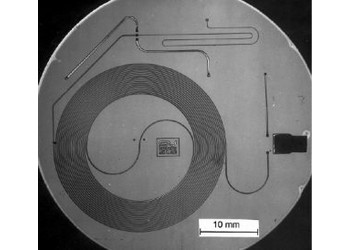
First Micro GC on a chip (1979)
A miniature gas analysis system was constructed based on the principles of gas chromatography (GC). The main components are manufactured in silicon using photolithography and chemical engraving techniques, allowing reductions in size per 1000 compared to conventional laboratory instruments. The chromatography system is then composed of a « valve » d-injection of the sample into a 1.5 m long capillary column, which is manufactured on a substrate silicon plate. The output thermal conductivity detector (TCD) is manufactured separately in batches and mounted in an integrable way on the blister. Gaseous hydrocarbon mixtures are separated in less than 10 seconds!
The system was to find an application in the areas of portable ambient air quality monitors, implanted biological experiments and planetary probes. Which was a bit the case, we will see later.
Microsensor Technology, Inc MTI Analytical Instruments, created in 1981, pioneered the use of microelectromechanical systems (MEMS) for the development of miniature gas chromatographs. From its origin, interfacing with a laptop, the GC microphone was capable of operating in the field.
In 1990, William R. Higdon purchased Micro-sensor Technology, Inc. on the brink of bankruptcy. MTI then has its own production of silicon micro-vane sensors and systems. Therefore, the fundamentals of technology are taken action. A micro-machine injector in silicon, a capillary column and a nano-TCD detector form the analysis module. 30 years later, the ultra-innovative concept for the era remains the same.
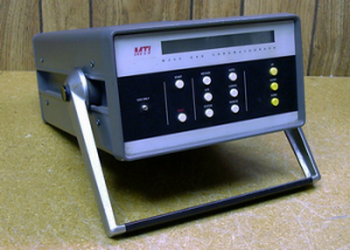
Photo of the first MTI
MTI Analytical Instruments products have been used in portable applications, conventional laboratory environments and more industrial environments for online applications such as offshore drilling, emission measurement and process monitoring. MTI, a pioneer in the field, was the first company in the world to do gas chromatography in the field.
In 1994, MTI Microsensor Technology Inc. marketed the first portable micro GC P200 with gas storage and battery, and then introduced the P200H with 100°C heated sample input for the analysis of volatile organic compounds and other higher boiling point molecules (up to 220°C).
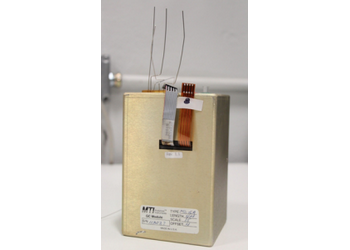
Photo of an MTI analytical module
It is the same P200 model that after a few minor modifications will be on board for the NASA space mission on 1 July 1997.
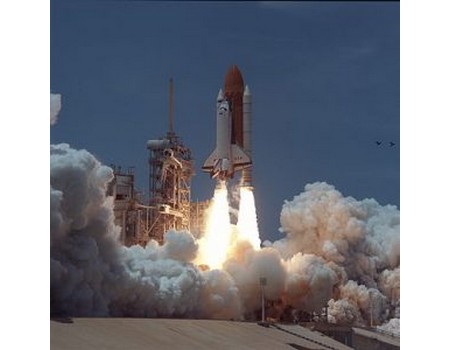
STS-94 mission rocket take-off
The MicroGC will be used for the analysis of experimental combustion gases on the Columbia Space Shuttle for STS-94.
In 1998, MTI produced microchromatographs. It is a company of 45 people.
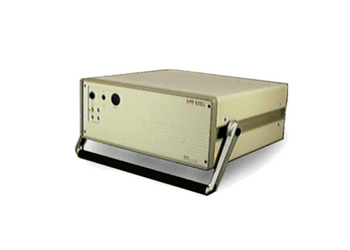
Micro GC MTI 4 modules
MTI is sold to Hewlett-Packard, which markets the same micro GC for a few years M200, P200, P200H. The product is then developed in Little Falls Analytical Division, located in Wilmington USA. Here the following generation will be developed: M3000.
HP will subsequently become Agilent Technologies that will continue to commercialize the GC 3000 micro.
INFICON will purchase this technology in 2010.
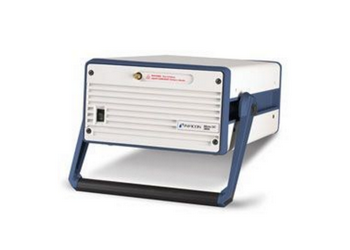
INFICON 3000 2 modules
In 2014, INFICON introduced the first micro GC with temperature programable column. The Fusion model is therefore the latest in the MTI micro GC range.

(1) A gas chromatographic air analyzer manufactured on a silicon wafer. IEEE Transactions on Electron Devices. 1979;26:1880–6.